What Do Those Fabric Blend Percentages on Activewear Labels Actually Mean?
Quick Answer: The base fiber (nylon or polyester) determines durability, sweat-wicking, and squat-proof opacity, while the stretch fiber percentage (spandex or elastane, typically 5-25%) determines how much the fabric stretches and recovers its shape. Nylon-based blends with at least 15-20% spandex are generally the most squat-proof and long-lasting combination for high-movement activewear.
Those small percentages on the inside tag look like boilerplate, but they’re actually a fairly reliable predictor of how a legging will hold up — more useful than price or brand name alone.
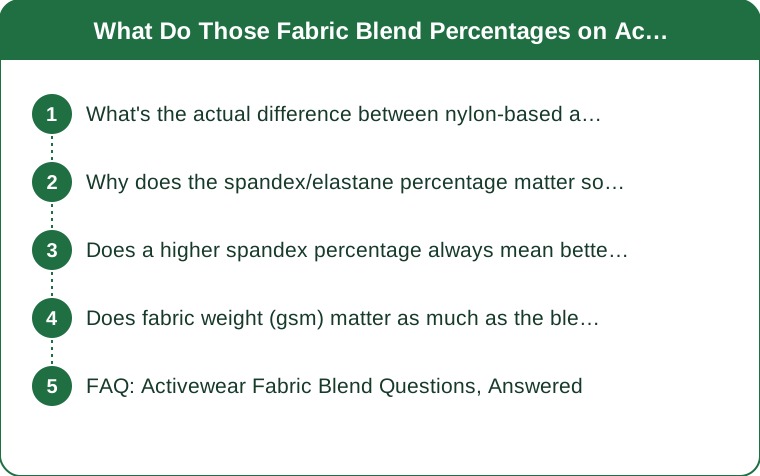
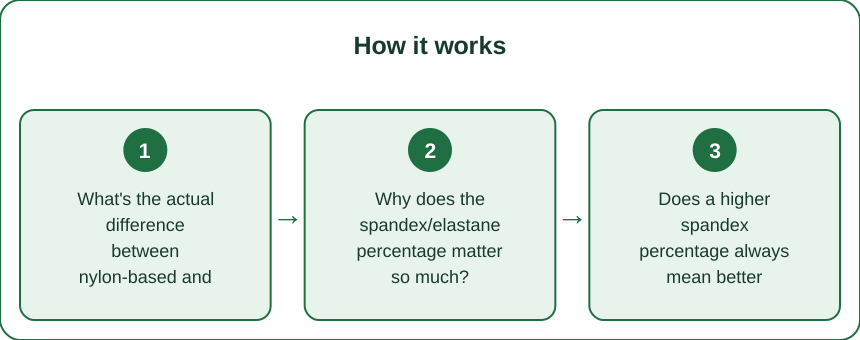
What’s the actual difference between nylon-based and polyester-based leggings?
Nylon tends to be softer, more opaque at a given weight, and dries slightly slower, with generally excellent recovery (returning to shape after stretching) over many wears — this is why a lot of premium squat-proof leggings lean nylon-based.
Polyester is typically more durable against pilling and fading, dries faster, and tends to be more budget-friendly at similar quality levels, though it can run slightly less soft against skin than nylon at comparable price points. Neither is universally ‘better’ — the right choice depends on which tradeoffs matter more for your use.
Why does the spandex/elastane percentage matter so much?
This is the fiber actually responsible for stretch and recovery — a higher spandex percentage (18-25%) generally means the fabric stretches more and snaps back to shape more reliably after repeated squats, lunges, and machine washing, which is the core mechanism behind ‘squat-proof’ performance over time.
Leggings with a low spandex percentage (under 10%) may feel fine on the first wear but are more prone to bagging at the knees and losing shape after a few months of regular wear and washing — the spandex content is doing more predictive work for long-term durability than almost any other spec on the label.

Does a higher spandex percentage always mean better quality?
Not automatically — extremely high spandex percentages (above 25-28%) can sometimes mean a thinner, less structured fabric that stretches easily but doesn’t hold compression or opacity as well, since spandex alone doesn’t provide the base structure that nylon or polyester fibers do. The base fiber and spandex percentage work together, not spandex alone driving quality.
A fabric blend around 75-80% nylon or polyester with 20-25% spandex is a commonly cited sweet spot in squat-proof activewear, balancing structure, opacity, and stretch recovery — though exact optimal ratios vary somewhat by specific fiber quality and knit construction.
Does fabric weight (gsm) matter as much as the blend percentage?
Yes, arguably more for squat-proof opacity specifically — grams per square meter (gsm) measures fabric density, and a heavier gsm fabric (often 220gsm+) resists see-through under stretch better than a lighter fabric with the identical fiber blend percentage. A well-blended but thin, low-gsm fabric can still go sheer during a deep squat.
When gsm isn’t listed (many budget brands omit it), the stretch test — pulling the fabric taut over your hand and checking for see-through — is the most reliable proxy available at time of purchase.
FAQ: Activewear Fabric Blend Questions, Answered
Is Lycra the same thing as spandex or elastane?
Yes — Lycra is a specific branded version of spandex (also called elastane outside the US), made by a particular manufacturer. Functionally it serves the same stretch-and-recovery role as generic spandex/elastane.
Do cotton-blend leggings work for workouts?
Cotton blends generally aren’t recommended for high-sweat activity — cotton absorbs moisture rather than wicking it, which means it stays wet and heavy during a workout, unlike nylon or polyester blends built for moisture management.
Does a higher price always mean a better fabric blend?
Not reliably — price often reflects brand, design, and marketing as much as fabric quality. Checking the actual blend percentage and gsm (when available) is a more direct predictor of performance than price alone.
TL;DR:
- Base fiber (nylon vs polyester) determines durability, opacity, and dry time
- Spandex/elastane percentage (aim for 18-25%) drives stretch and shape recovery
- Extremely high spandex without enough base fiber can mean a thinner, less structured fabric
- Fabric weight (gsm) matters as much as blend percentage for squat-proof opacity
The tag’s small print is one of the most reliable purchase signals available — worth reading before checking price or reviews.
See It in Motion
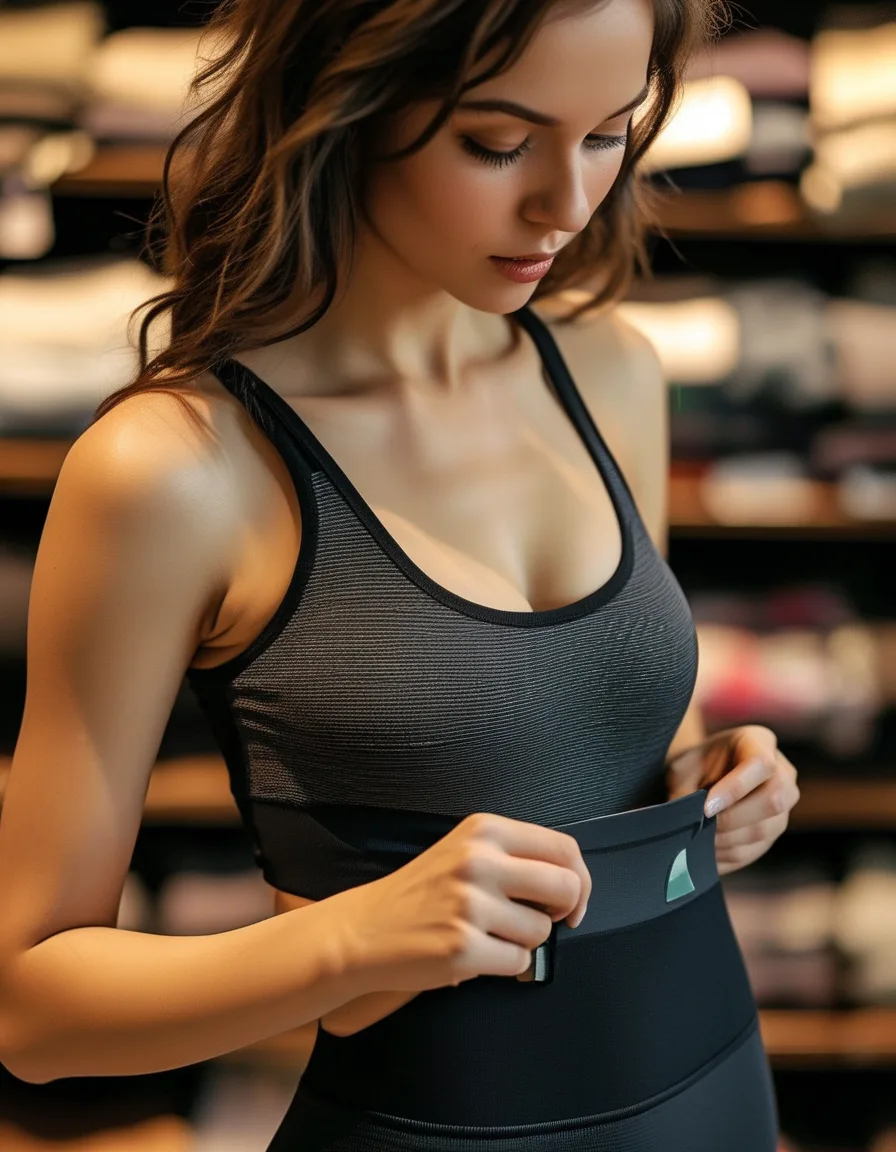
Seen here: High Waist Yoga Leggings with Side Pockets — shop it on bubblelime.com
Keep Reading
This article is for general informational and styling purposes only. Fit, sizing, and product availability may vary.