What Those Fabric Blend Percentages on Your Leggings Actually Mean
Quick Answer: Higher nylon percentage (75%+) usually means smoother, more opaque, cooler-feeling fabric; higher polyester means more moisture-wicking but sometimes less opaque. Spandex percentage (usually 5-20%) controls stretch and recovery — higher spandex holds shape longer.
You’ve stood in a fitting room reading ‘78% Nylon, 22% Spandex’ on a tag without really knowing what that means for how the leggings will actually perform. It turns out that ratio predicts a lot more than the price tag does.

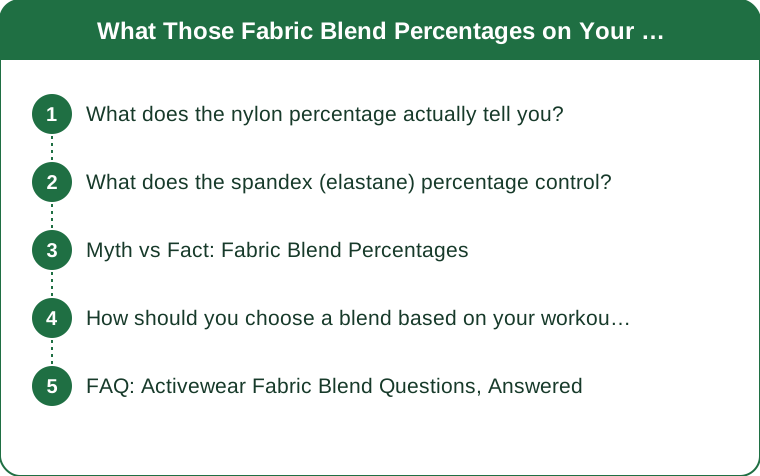
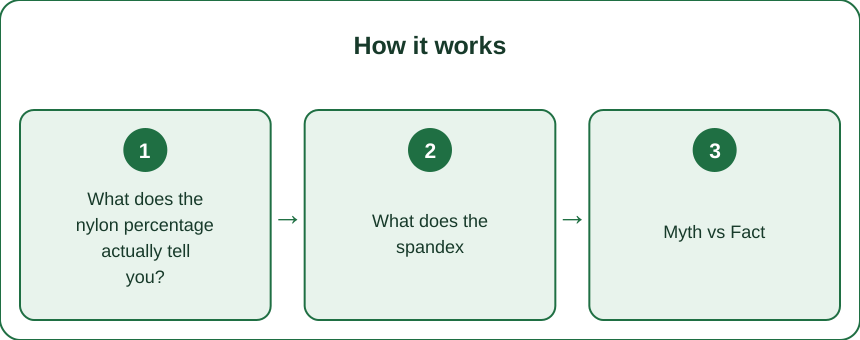
What does the nylon percentage actually tell you?
Nylon is generally smoother, more opaque, and has a cooler hand-feel than polyester at a similar weight, which is why higher-nylon blends (75%+) are often marketed as premium or squat-proof. Nylon also tends to hold color better over time and resist pilling more than polyester.
The tradeoff is that nylon is typically less moisture-wicking than polyester, so very high-nylon blends can feel slightly warmer during sweaty workouts.
What does the spandex (elastane) percentage control?
Spandex percentage directly controls stretch and shape recovery — most quality leggings sit between 8-20% spandex, with higher percentages meaning more stretch and better recovery after repeated wear and washing. Below about 5% spandex, fabric tends to feel stiffer and loses shape faster over time.
Too much spandex (above 20%) isn’t necessarily better — it can make fabric feel overly clingy or reduce durability of the weave itself, so more isn’t automatically an upgrade.

Myth vs Fact: Fabric Blend Percentages
Myth: higher spandex percentage always means better quality. Fact: spandex percentage affects stretch specifically — opacity and durability depend more on the base fiber (nylon vs polyester) and the weave density, not spandex alone.
Myth: polyester is always the cheaper, worse option. Fact: polyester is genuinely better at moisture-wicking than nylon, making it a smart choice specifically for high-sweat cardio, even in premium activewear lines.
How should you choose a blend based on your workout type?
For squat-heavy strength training or yoga, prioritize higher nylon (75%+) for opacity and a smoother feel under stretch. For high-sweat cardio like running or HIIT, a higher polyester blend with good moisture-wicking claims performs better for temperature regulation.
Checking both the fiber percentage and the specific finish (like ‘brushed’ or ‘compression’) on the tag gives a fuller picture than either number alone.
FAQ: Activewear Fabric Blend Questions, Answered
Is nylon or polyester more opaque for squats?
Nylon blends are generally more opaque and less likely to show through during deep stretch movements like squats.
What spandex percentage is ideal for leggings?
Most quality leggings perform well between 8-20% spandex; below 5% often feels stiff, and above 20% doesn’t necessarily add benefit.
Does a higher price always mean a better fabric blend?
Not always — checking the actual percentages and finish on the tag is a more reliable indicator of performance than price alone.
TL;DR:
- Higher nylon percentage means more opaque, smoother, cooler-feeling fabric
- Higher polyester means better moisture-wicking, useful for sweaty cardio
- Spandex percentage (ideally 8-20%) controls stretch and shape recovery
- Match the blend to your workout type rather than assuming higher spandex is always better
Next time you’re shopping, flip the tag before the price tag — the percentages predict performance more reliably.
See It in Motion
Seen here: High Waist 8” Yoga Shorts — shop similar styles on bubblelime.com
Keep Reading
This article is for general informational and styling purposes only. Fit, sizing, and product availability may vary.