Why Leggings Go Sheer at the Seat Before Anywhere Else
Quick Answer: The seat is where three forces overlap: maximum biaxial stretch when you bend, the highest abrasion from sitting on gym benches, chairs and car seats, and the largest area with no seam reinforcement. Fabric that is stretched thin is also being abraded, and abrasion removes exactly the fibres that were maintaining opacity. It is a mechanical wear pattern, not a manufacturing fault, and it is accelerated by wearing them two days running and by washing them hot.
Which means the fix is partly about the garment and substantially about how it is used.
This blog has covered why leggings pass the squat test in store and fail at the gym, why squat-proof leggings fail faster worn two days in a row, and whether a higher price predicts better fabric. This is the failure mechanism itself.

Why the seat and not the knees?
Because the seat is the only area where all three failure drivers coincide.
Biaxial stretch is highest across the seat. Bending forward stretches the fabric both vertically and horizontally at once, which thins it far more than the single-direction stretch at the knee.
Fabric opacity is a direct function of thickness. Stretch the same fabric by 40 percent in two directions and you have substantially reduced the amount of material between light and skin.
Abrasion is highest there too. Benches, chairs, car seats, mats and the floor all contact the seat, and nothing contacts the back of the calf.
Knees stretch but rarely abrade. They bag out rather than going sheer, which is a different and much less consequential failure.
There is no seam reinforcement across a modern seat panel. Seamless and bonded constructions have removed the very seams that used to add structure there.
And it is the one area you cannot inspect yourself. People discover it in a class mirror or in a photo, which is why it feels sudden even though it has been developing for weeks.
What actually degrades in the fabric?
The elastane and the knit structure, on different timelines.
Elastane fibres lose recovery with repeated maximum extension. Each cycle to near its limit permanently reduces how well it returns, and the seat sees the most extreme cycles.
Once recovery drops, the fabric no longer returns to its original density, so the resting thickness that provided opacity is permanently reduced.
Abrasion pills and thins the face yarns. Removing surface fibre reduces light scattering, which is a large part of what makes a knit opaque.
Heat is the main enemy of elastane. Hot washes, tumble driers and hot cars all accelerate the loss, and heat damage is not reversible.
Body oils and sweat degrade elastane too, which is why washing after every wear actually extends life rather than shortening it — provided the wash is cool.
Fabric softener coats fibres and reduces recovery further, and it is one of the most common self-inflicted causes of early failure.
And there is a 24-hour recovery period. Elastane needs roughly a day to return to its resting state, which is precisely why wearing the same pair on consecutive days accelerates this failure so noticeably.
Myth vs Fact: Legging Opacity and Wear
Myth: Going sheer means they were badly made. Fact: It is a predictable mechanical wear pattern in every stretch knit. Better fabric delays it; nothing prevents it. What varies enormously is how many wears you get before it happens.
Myth: Thicker fabric always lasts longer. Fact: Weight helps opacity but recovery quality matters more. A well-engineered 250gsm fabric with good elastane recovery outlasts a poorly built 320gsm one, and feels considerably better.
Myth: You can restore opacity by washing them. Fact: You cannot. Elastane recovery loss and abrasion thinning are both permanent. Washing correctly slows future degradation; it does not reverse what has happened.
Myth: Black leggings do not go sheer. Fact: They do, and dark colours frequently show it more under bright gym lighting because the contrast between fabric and skin is greater. Dark colours mainly hide it in ordinary daylight.
Myth: Sizing up prevents it. Fact: Sizing up reduces resting stretch, which genuinely helps, but too large a size causes bagging, sliding and seam misalignment. True-to-size in a fabric with good recovery is the better answer.
Myth: Air-drying makes little difference. Fact: Tumble drying is the single most damaging thing most people do to activewear. Heat plus mechanical agitation degrades elastane faster than anything else in normal use.
What actually extends their life
Mostly what happens after the workout.
Rotate at least three pairs. Elastane needs roughly 24 hours to recover fully, and giving it that is the highest-value habit available.
Wash cold, always. Thirty degrees or below. Heat is the primary killer of elastane.
Never use fabric softener. It coats the fibres, reduces recovery and impairs moisture management at the same time.
Air dry, never tumble. This alone frequently doubles the useful life of a pair.
Turn them inside out to wash and use a mesh bag, which reduces surface abrasion against everything else in the drum.
Wash after every wear, but gently. Body oils degrade elastane, so leaving them unwashed is worse than washing them cool.
Do not sit on rough surfaces in them where you can avoid it. Textured gym benches and rough upholstery cause more abrasion than the training does.
And check them properly rather than waiting to be told. Bend forward in bright, direct daylight with a phone camera behind you. The mirror in a dim bedroom will tell you they are fine long after they are not.
FAQ: Legging Wear Questions, Answered
Why do my leggings go see-through at the bum first?
Because the seat is the only area where maximum two-directional stretch, the highest abrasion from sitting, and the absence of seam reinforcement all overlap. Stretched fabric is thinner, and abrasion removes the surface fibres that were providing opacity.
Does wearing leggings two days in a row damage them?
Yes, measurably. Elastane needs roughly 24 hours to recover its resting shape, and wearing them again before that means starting each session from a partly extended state. Rotating three pairs is the simplest fix.
How should I wash leggings to make them last?
Cold water, inside out, in a mesh bag, no fabric softener, air dried. Tumble drying is the single most damaging common habit, and heat damage to elastane is permanent.
TL;DR:
- The seat fails first because maximum biaxial stretch, maximum abrasion and zero seam reinforcement all overlap there.
- Elastane recovery loss and surface abrasion are both permanent. Washing correctly slows it; nothing reverses it.
- Rotate three pairs, wash cold, skip the softener, and never tumble dry. Those four habits often double the lifespan.
- Check by bending in direct daylight with a phone camera. A dim bedroom mirror will not tell you the truth.
Going sheer at the seat is physics, not a defect. Change the laundry routine before you change the brand.
See It in Motion
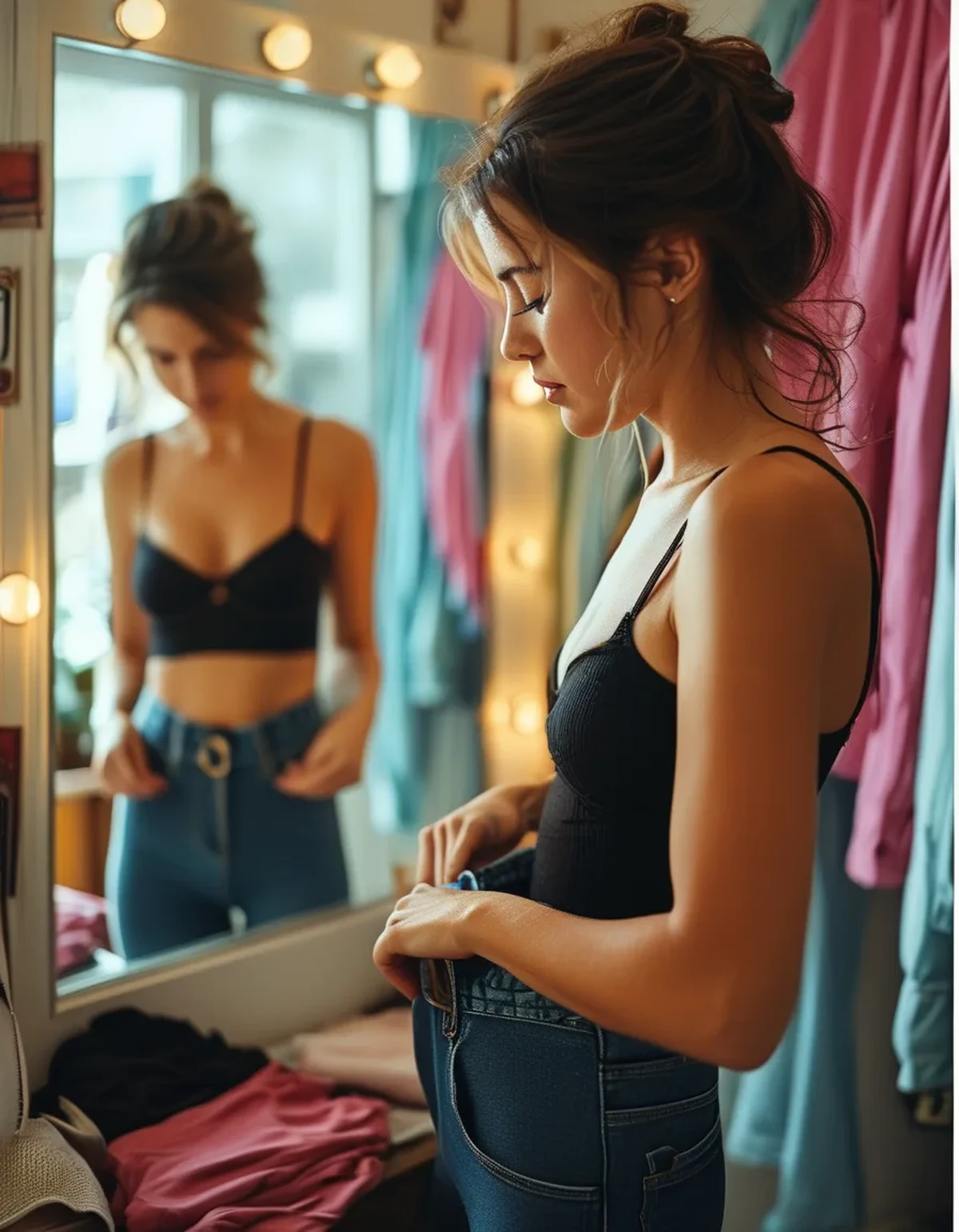
Seen here: High Waist Yoga Leggings with Side Pockets — shop it on bubblelime.com
Keep Reading
This article is for general informational and styling purposes only. Fit, sizing, and product availability may vary.