Why Leggings Pass the Squat Test in Store and Fail at the Gym
Quick Answer: The fitting room squat tests cool, dry, unstretched fabric under flattering light. In the gym the same fabric is warm, damp, stretched over a longer duration, and lit from above. Heat and moisture both reduce opacity, sustained stretch thins fabric more than a brief one, and overhead lighting reveals what mirror-level lighting hides. Test by holding a deep squat for 20 seconds under bright overhead light, not by bouncing once.
You did the squat check. Twice. Then someone mentioned it mid-class and you’ve never worn them since.
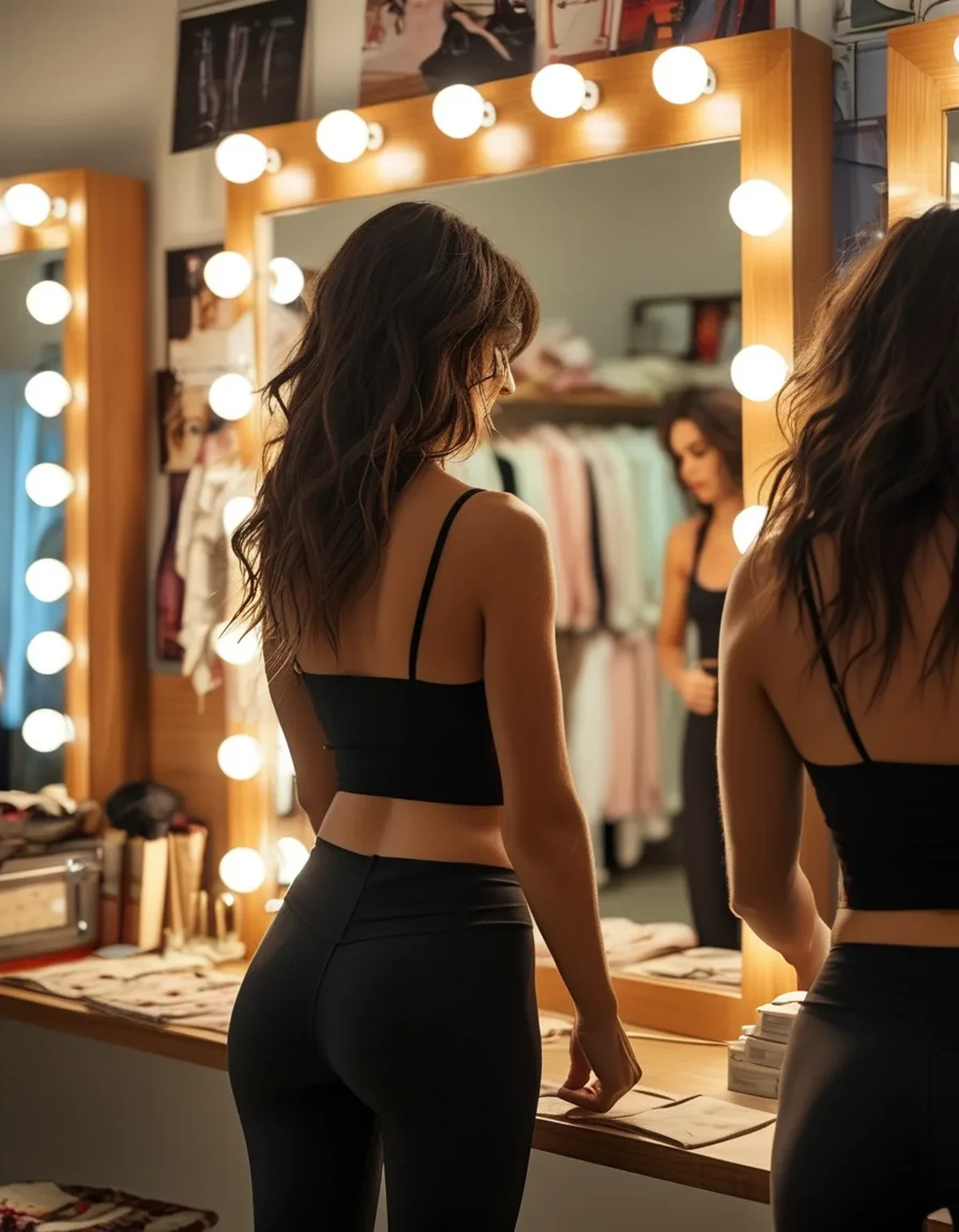
Why does the store test fail?
It tests the easiest possible conditions, and three variables change at the gym.
Duration. A quick squat stretches the fabric for one second. Knit fabric under sustained tension continues to thin as the yarns redistribute — a 20-second hold shows noticeably more than a 1-second dip. Any position you hold in class is a sustained stretch.
Temperature and moisture. Warm, damp fabric is more pliable and the yarn structure opens further. Sweat also darkens fabric unevenly, and areas that are wet transmit light differently from areas that aren’t. This is why opacity issues often show up 20 minutes in rather than at the start.
Lighting angle. Fitting rooms are lit at face level to be flattering. Gyms are lit from directly overhead, which throws light down across the seat and the back of the thigh — the exact areas in question, at the exact angle that reveals them.
There’s a fourth quieter variable: what’s underneath. High-contrast underwear reads through fabric that would be fine with a matched tone. Some of what gets blamed on the leggings is a contrast problem.
What makes fabric actually opaque?
Four properties, and only one of them is thickness.
Weight in GSM (grams per square meter) is the headline number. Below about 200 GSM, opacity gets unreliable in light colors. 220–280 GSM is the reliable range for most knits. Brands that publish GSM are giving you real information.
Knit density matters as much as weight. A tightly knit lighter fabric can outperform a loosely knit heavier one, because opacity is about how much light passes between yarns rather than total mass.
Fiber content. Higher elastane content stretches more, and more stretch means more thinning. The 12–22% elastane range is typical; above that, opacity gets harder to maintain. Nylon-based fabrics generally hold opacity better than polyester at equal weight.
Color and finish. Dark solids hide the most. Light colors, heathers, and anything with a sheen show the most. A brushed interior finish adds a light-scattering layer that helps significantly.
The honest summary: a dark, 250+ GSM, densely knit nylon-elastane legging is reliably opaque and almost everything else is a gamble. Which is why light-colored leggings remain a recurring disappointment regardless of price.
What Nobody Tells You About Squat-Proof Claims
“Squat-proof” is not a regulated term. No standard, no test, no verification. It means the brand believes it, which is not nothing but isn’t evidence.
The same style can change between production runs. Brands adjust fabric suppliers and specs without changing the product name. The pair you loved two years ago may be a genuinely different garment now, which is why reviews from different years contradict each other.
Seam placement matters as much as fabric. A center back seam under tension is a weak point regardless of fabric weight. Gusseted, offset-seam designs distribute stretch better and are more reliable in the exact area that gets scrutinized.
Sizing down destroys opacity. Every legging is opaque at its intended stretch and translucent past it. A pair that’s slightly too small fails a test the correct size would pass. A meaningful share of opacity complaints are sizing complaints.
Washing changes it. Fabric softener coats fibers and degrades recovery; hot drying breaks down elastane. A pair that’s fine when new and translucent after two months usually wasn’t cheap fabric — it was hot laundry.
Price correlates weakly. Some $30 leggings are 260 GSM nylon and some $110 ones are 190 GSM polyester in a light heather. The spec sheet predicts better than the price tag.
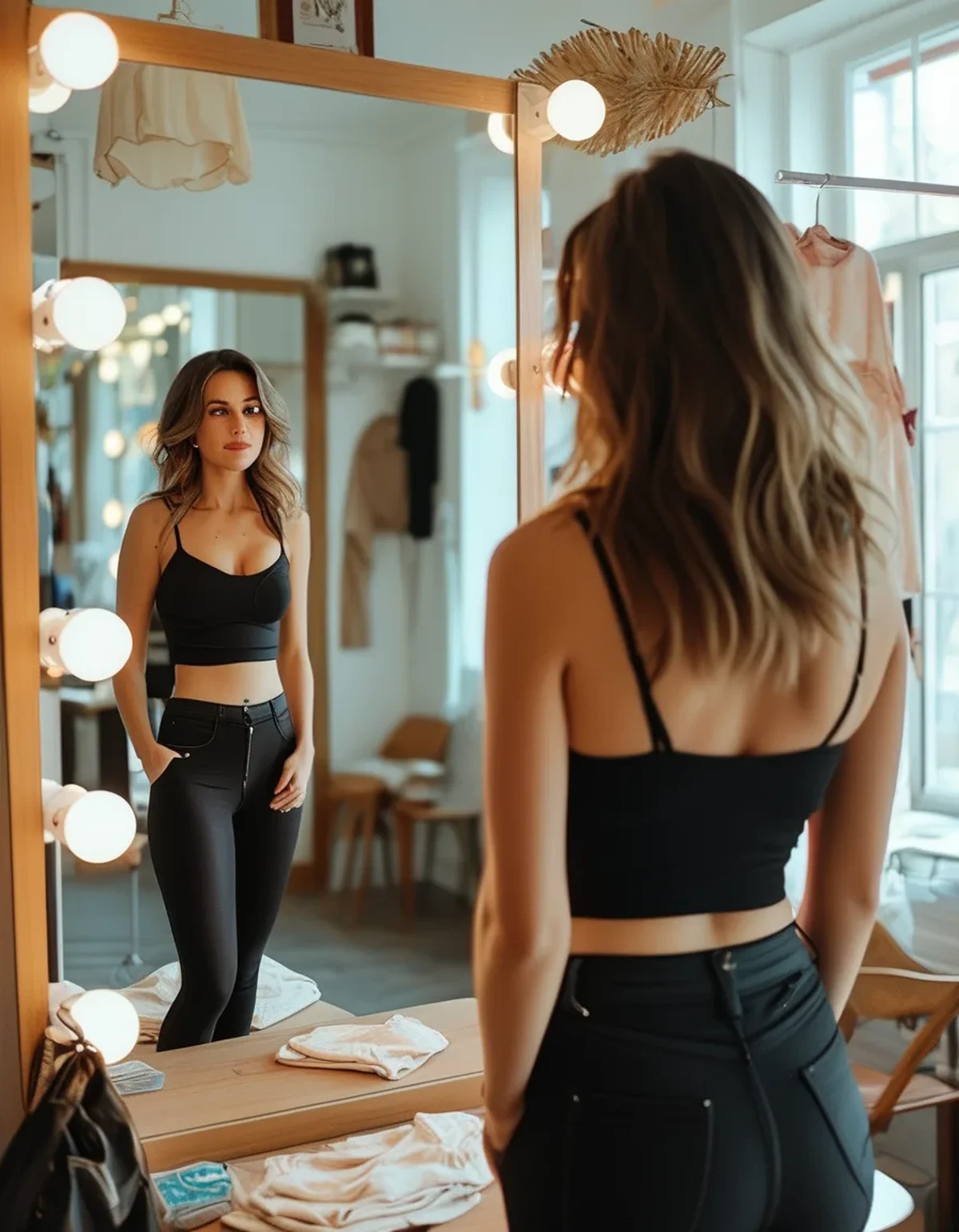
How should you actually test a pair?
There’s a sequence that catches nearly everything the store test misses.
In the store:
- Squat deep and hold for 20 seconds, not one.
- Have the fabric under bright light, or use your phone flashlight held above and behind at about hip height.
- Stretch the fabric flat between two hands and hold it up to the light — if you can clearly see your hand through it under tension, it will fail in class.
- Check the seat seam specifically, since that’s where tension concentrates.
At home before wearing out: 5. Wear them for a 20-minute workout at home and check in a mirror under overhead light while warm. 6. Repeat after the first wash, because that’s when some fabrics change.
The flashlight test is the single most predictive one and takes five seconds. Fabric that passes a direct backlight under stretch will pass everything else.
One more that costs nothing: match your underwear tone to the legging color for the test. If it’s fine with matched tones and marginal with contrast, that’s useful information — it means the leggings are wearable with a small adjustment rather than a return.
Is it worth paying more for opacity?
Up to about the mid range, yes. Past that, you’re buying other things.
Under $40 the failure rate is genuinely higher, mostly because the fabric weight is lower and quality control between runs is less consistent. Not universal — there are excellent budget pairs — but the variance is wide.
$50 to $80 is where reliable 250+ GSM nylon-elastane construction is common, seams are gusseted, and specs are stable across runs. This is where the opacity problem is largely solved.
Above $100 you’re paying for fit refinement, fabric hand-feel, pocket design, brand, and color range. Opacity is not meaningfully better than the tier below.
Where to actually put your money: buy fewer pairs at the reliable tier and rotate them. Three pairs in rotation, cold-washed and air-dried, outlast six cheap pairs and you never have to think about the question again.
And if you already own a pair that’s borderline — before writing them off, check whether they’ve been through a hot dryer, whether you’ve been using fabric softener, and whether they’re a size small for you now. Two of those three are fixable, and the third tells you something useful for the next purchase.
FAQ: Squat-Proof Legging Questions, Answered
Do light-colored leggings ever work?
Some do, but they need higher weight and a brushed or double-layer construction to compensate. Expect to pay more for equivalent reliability, and test them harder. Heathered light colors are the least reliable of all.
Why did my leggings become see-through after a few months?
Most often hot machine drying, which breaks down elastane and permanently reduces recovery. Fabric softener is the second cause. Cold wash, no softener, air dry — and if they’ve already lost recovery, it doesn’t come back.
Does sizing up help with opacity?
Only if you were sizing too small to begin with. Correct size at rest means correct stretch under load. Sizing up beyond your actual size creates waistband and knee bagging without adding opacity benefit.
TL;DR:
- The store test misses duration, heat, moisture, and overhead lighting — all four reduce opacity.
- Look for 220–280 GSM, dark solid, nylon-based, gusseted seams.
- Backlight the stretched fabric with your phone; it predicts everything else in five seconds.
- Hot drying and fabric softener cause most “they went see-through” cases.
“Squat-proof” is a marketing phrase with no standard behind it. A twenty-second hold under a phone flashlight is a better test than any label, and it’s free.
See It in Motion
Seen here: High Waist Yoga Leggings with Side Pockets — shop it on bubblelime.com
Keep Reading
This article is for general informational and styling purposes only. Fit, sizing, and product availability may vary.