Why Sizing Up Does Not Fix Sheer Leggings
Quick Answer: Sheerness is a fabric property — knit density, fabric weight, and fiber quality — and size only nudges it. A thin knit stretched to eighty percent shows skin, and the same knit at sixty percent still shows skin: sizing up moved you along the curve, not off it. What the bigger size definitely adds is negative fit — a waistband with nothing to grip that slides on every rep, and bagging where compression should be. Truly squat-proof leggings are made squat proof at the factory, through dense double knit fabric and real weight per square meter. The fix is a fabric decision, not a size decision.
If a legging needs a size it was not designed for to stay opaque, the fabric already failed.
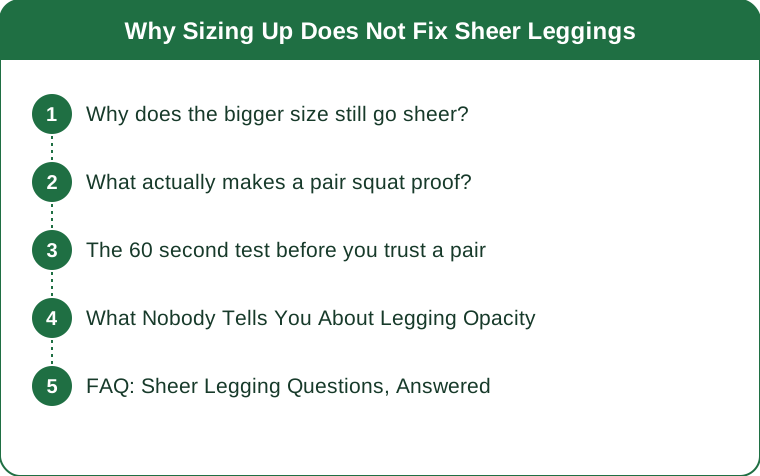
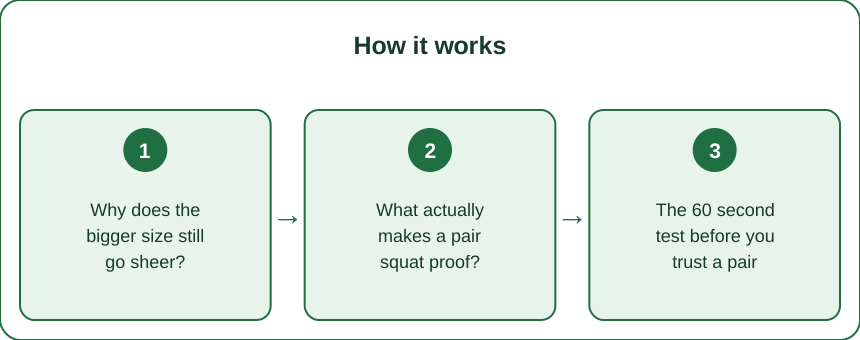
Why does the bigger size still go sheer?
Because the opacity ceiling was set by the knitting machine, and your size choice only decides how far below it you operate.
A legging’s opacity comes from how much fiber sits in each square inch of fabric — knit density and fabric weight — and how that knit behaves under stretch. When fabric stretches, the loops of the knit open and the fiber spreads over more area; stretch any knit far enough and gaps open between yarns that light passes through. The question is where that threshold sits.
A thin, loosely knitted fabric crosses into sheer at modest stretch — the stretch an ordinary fit produces just standing up. A dense, heavy double knit holds opacity deep into the extreme stretch of a full depth squat. That difference was decided at manufacture, and no size on the wall changes it.
Run the numbers on what sizing up buys: across the seat, one size might be a couple of inches of relief — reducing local stretch from, say, eighty percent to sixty five. If the fabric goes sheer at fifty, both numbers lose. You paid for a worse fit to stay on the wrong side of the same line.
And the squat itself is merciless geometry: at the bottom, the fabric across the seat and back thigh is stretched near its maximum over the body’s widest surface, in the brightest room you occupy all week, at exactly hip height behind you. It is the hardest test any garment faces, which is why a pair that looks fine in the bedroom mirror fails in the gym — the bedroom never asked the real question.
Meanwhile the upsize collects its rent: a waistband cut for a bigger waist grips nothing and slides with every rep, fabric bags at the knee by the second wear, and compression — half the reason for the garment — is gone.
What actually makes a pair squat proof?
Density, weight, construction, and color — in that order, and all of them checkable.
Fabric weight is the closest thing to a spec sheet answer. Heavier compressive knits — the category running roughly from the mid two hundreds in grams per square meter — carry enough fiber to stay opaque under full stretch, while featherweight summer fabrics simply cannot. Brands that publish the number are telling you something; with the rest, your hand learns to feel it fast — a squat-proof fabric has presence between the fingers.
Double knit and interlock constructions matter as much as weight. Two interlocked layers of loops mean stretch opens gaps in offset positions rather than straight light paths. This is why some famously buttery-soft leggings — brushed, midweight, densely interlocked — hold opaque while shinier, thinner fabric fails: softness and squat proofing are separate axes, and the good pairs score on both.
Color and finish move the threshold. Solid black hides a multitude; light heather grey is the most honest fabric in the store, showing stretch, sweat, and skin first. Matte survives stretch better than sheen, because shine amplifies every thinned patch under gym lights. If you love pale colors, they need the heaviest fabric you can find — or a gusset and seat construction designed with lining panels.
And compression is part of opacity, not its enemy. A properly fitted compressive knit distributes stretch evenly across the whole panel; a loose fit lets stretch concentrate at the widest points. This is the final argument against the upsize: the correct size in a dense fabric stretches less at the seat than the bigger size of a flimsy one, because the load is shared.
High-waisted cuts help for the same reason — more panel, more distribution, and a band that anchors through the movement instead of negotiating with it.
The 60 second test before you trust a pair
Three checks in the store, one at home, and a re test every few months — because opacity is a moving target.
The hand stretch. Slide your hand inside the leg and stretch the fabric over your spread fingers in bright light. If you can see skin tone or knuckle definition at a stretch resembling a squat, the answer arrived before the fitting room. This single check filters most failures in ten seconds.
The fitting room squat. Wear or bring neutral underwear, face away from the mirror, and hit an actual full depth squat — not a polite half bend. Look back over your shoulder at the bottom, or burst-photo it. The pair auditions for the job it will actually hold.
The bend and hold. Deep forward fold, thirty seconds — the yoga and deadlift test. Different stretch pattern than the squat, and some fabrics pass one and fail the other.
At home, the flashlight test before the tags come off: leggings on, phone light held a foot behind the seat in a dim room, check the mirror. Harsh, unflattering, and exactly what gym lighting does.
Then re test the veterans quarterly. Fabric thins with wear and wash, elastane fatigues, and last year’s fortress can be this year’s liability — the pair itself changed, even though your memory of it did not. Thirty seconds with the flashlight after laundry day keeps the rotation honest.
One closing note on reviews: search any pair’s reviews for the word sheer before buying online. A hundred strangers already ran these tests and wrote down the results — the fastest sixty seconds of research in activewear.
What Nobody Tells You About Legging Opacity
Sheer is progressive, not binary. Every pair sits somewhere on a curve, and wear moves it the wrong direction — thinning fiber, fatiguing elastane, loosening knit. The pair that passed at purchase can fail at month ten, which is why the quarterly re test earns its thirty seconds.
Heat is the silent accelerator. Hot washes and the dryer age the elastane that keeps the knit dense and recovering; air dried pairs hold their opacity months longer. Late summer adds its own tax — sunscreen and sweat degrade stretch fibers, so August pairs earn a same day wash.
Sweat drops opacity in real time. Damp fabric clings and turns translucent a shade earlier than dry, which is why the hot yoga room and the July long run are where marginal pairs get exposed. The pair for sweat soaked sessions needs a margin of safety, not a passing grade.
Gym lighting is the exam, home lighting is the practice test. Overhead fluorescents at squat rack height reveal what a warm bedroom lamp forgives. Judge marginal pairs under the harshest light you can find, because that is where they will be judged.
The fix for an almost good pair is layering, not luck — dark seamless shorts underneath extend a marginal pair’s gym life honorably. And the fix for a failed pair is demotion, not denial: sheer at the squat rack, fine under long tops and fall layers, which conveniently are arriving next month.
Fall is the buying season working in your favor. Heavier weight fabrics dominate autumn drops, so replacing summer’s thin casualties in September lands you in exactly the dense, brushed, opaque inventory the season stocks. The wardrobe reset writes itself.
FAQ: Sheer Legging Questions, Answered
So should I ever size up in leggings?
For comfort preferences, waistband feel, or between-size bodies, sure — sizing is personal. As a sheerness fix, no: it trades away fit and compression for a marginal opacity gain that dense fabric would have delivered outright. Buy opacity in the fabric, buy fit in the size.
Are expensive leggings always more squat proof?
No — price and opacity correlate loosely at best. Plenty of midrange pairs are built on dense interlock knits that outperform premium fashion leggings made of thin shiny fabric. The hand stretch test outranks the price tag every time.
Why do my leggings only go sheer at the gym, never at home?
Stacked conditions: full depth movement, maximum stretch, sweat dampening the fabric, and overhead lighting at exactly the wrong height. Home offers none of those. Test at home with the flashlight and the deep squat, and you close the gap between the two verdicts.
Do squat proof leggings exist in light colors?
Genuinely, yes — but the bar is higher: heaviest available fabric, matte finish, ideally a lined or double paneled seat, and a pass on the flashlight test while slightly damp. Light heather without those credentials is a gamble that gym lights usually win.
TL;DR:
- Sheerness is set by knit density and fabric weight at manufacture; sizing up moves you along the stretch curve, not off it.
- The upsize costs you a gripping waistband and compression, and delivers bagging in exchange for a marginal opacity gain.
- Buy squat proof at the fabric level: dense double knit, real weight, matte finish, darker colors — then verify with the hand stretch, deep squat, and flashlight tests.
- Re test aging pairs quarterly, air dry to protect the elastane, and demote the failures to fall layering duty.
Run the flashlight test on your current gym rotation tonight. Two minutes now beats finding out at the rack on Monday.
See It in Motion
Seen here: High Waist Yoga Leggings with Inner Pocket — shop it on bubblelime.com
Keep Reading
This article is for general informational and styling purposes only. Fit, sizing, and product availability may vary.