Why Squat-Proof Leggings Fail Faster When You Wear Them Two Days Running
Quick Answer: Elastane needs unloaded time to fully recover from stretch. Worn on consecutive days, a pair starts day two already partially stretched, which means it spends the whole session at a higher extension - and higher extension means thinner fabric and more fibre stress. Over months, that compounds into lost opacity and lost recovery. Rotating three pairs makes each one last noticeably longer than wearing one until it dies.
The fabric is not tired from use.
It is tired from not being given a day off.
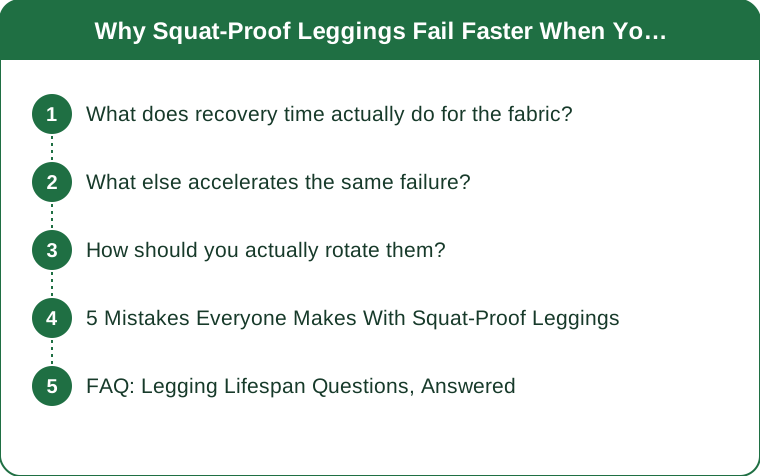
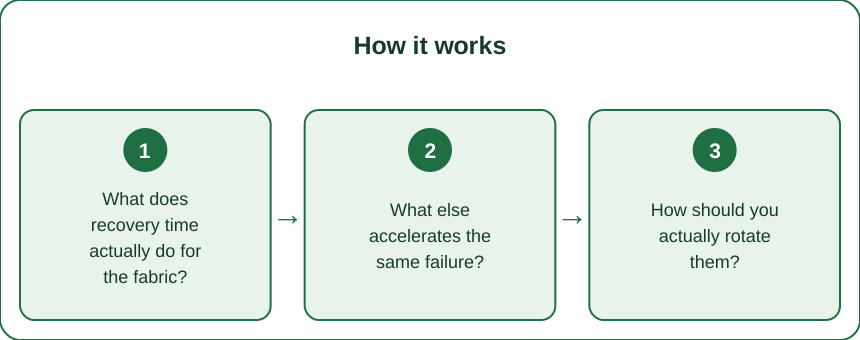
What does recovery time actually do for the fabric?
It lets the elastane return to its original length, which is not instant.
Elastane recovers in two phases. A fast one that happens within minutes of taking the garment off, and a much slower one over the following hours. The slow phase is where most of the remaining recovery happens - and it needs time you do not give a pair worn again the next morning.
Body heat delays it further. Warm elastane is more compliant and creeps more, so a pair worn for a long warm session comes off further from its original length than one worn for a cool half hour.
Starting day two pre-stretched changes everything downstream. If the waistband and seat begin the session already extended, they reach a higher extension during squats than they would have when fresh. Higher extension means the knit opens further, and an opened knit is a thinner, more transparent fabric.
And fibre stress is not linear. Taking a fabric to ninety percent of its stretch capacity is disproportionately harder on it than eighty percent. A small increase in the working extension produces a large increase in wear.
Which is why the failure appears suddenly. For months the pair seems fine, and then within a few weeks the seat is see-through. The degradation was gradual; the threshold was not.
What else accelerates the same failure?
Four things, and all of them stack with back-to-back wear.
Heat, from every source. Machine drying is the worst, but a hot wash, a radiator, a hot car, and direct sun on a drying rack all damage elastane permanently. Heat-damaged elastane does not recover - it is a one-way change.
Sizing too small. A pair that is already near its comfortable stretch limit when standing has almost nothing left for a deep squat. The single most common cause of a see-through pair is a size too small, not a bad fabric.
Body lotion, oils, and sunscreen. These break down elastane over time and leave residues that stiffen the fibre. Applying lotion immediately before dressing is a genuinely bad habit for anything with high elastane content.
Abrasion from surfaces. Sitting on rough gym benches, mat friction, and the back of a car seat all abrade the fabric surface at the seat - which is exactly where opacity matters most.
And washing frequency cuts both ways. Not washing lets oils accumulate and degrade the fibre; washing after every single wear adds mechanical stress. Every wear for anything sweaty, cold and gentle, is the right balance.
The compounding is the point. Any one of these is survivable. Back-to-back wear plus a hot dryer plus a size too small is a pair that lasts one season.

How should you actually rotate them?
Three pairs minimum, with at least 48 hours between wears, and a deliberate retirement order.
Three is the practical number. It gives every pair roughly two days of recovery in normal use, which covers the slow recovery phase comfortably. Two pairs is much better than one; three is where the returns start flattening.
Hang them rather than folding them straight away. Air and an unloaded position help the recovery, and a still-warm pair folded into a drawer holds its stretched shape longer.
Keep the newest pair for the highest-stakes sessions. The class with mirrors and the front row. Older pairs are fine for home workouts and walks, which is a much better use than retiring them entirely.
Retire them from squatting before you retire them completely. A pair that has lost opacity is still perfectly good for running, walking, and lounging. Losing the squat-proof property is not the end of the garment.
Test opacity every couple of months, in daylight, in the actual squat position. Indoor lighting hides a lot. Phone camera in natural light, mid-squat, is the honest test - and the one people avoid.
And buy in threes when you find a pair that works. Fabrics and fits change between production runs more than brands admit, and a set bought together ages together predictably.
5 Mistakes Everyone Makes With Squat-Proof Leggings
Wearing the same favourite pair every session. The most common one, and the one that costs the most - your best pair fails first precisely because it is your best pair.
Machine drying, even occasionally. One hot cycle can permanently reduce recovery, and a few will visibly change how a pair holds its shape. This is the single most damaging thing you can do.
Sizing down for a smoother look. A tighter pair is a more stretched pair, and a more stretched pair is a thinner, more transparent one under load. The look you wanted is the thing you lose first.
Testing squat-proofness standing up in a shop mirror. Standing tells you nothing. Bend fully, in daylight, and look properly - the fitting room is the cheapest place to find out.
Blaming the brand when the care did it. A pair that lasted six months of daily wear with hot washes and machine drying was not badly made. Most reported quality failures are care failures.
And the bonus mistake: throwing them out entirely. A legging that has lost opacity has usually kept its compression and comfort. Demote it rather than discarding it - that is two more years of use from a garment you already paid for.
FAQ: Legging Lifespan Questions, Answered
How long should a good pair actually last?
With rotation and correct care, a well-made pair typically holds its squat-proof property for a year or more of regular use. Worn daily and machine dried, the same pair might manage a few months. The care matters more than the price.
Does higher elastane content last longer?
Higher elastane usually means better recovery and better resistance to bagging, but elastane is also the component that heat destroys. A high-elastane pair rewards good care and punishes bad care more sharply than a lower-stretch fabric.
Can a stretched-out pair be restored?
Partly. A cold wash and a full air dry recovers most of the temporary stretch and often surprises people. What it cannot restore is heat-damaged elastane or fabric that has physically thinned - if opacity is gone, it is gone.
TL;DR:
- Elastane recovers over hours, not minutes - a pair worn two days running starts day two already stretched.
- Higher working extension means thinner fabric, which is why opacity fails suddenly after months of seeming fine.
- Rotate three pairs with 48 hours between wears, and hang rather than fold.
- Heat is the other killer - never machine dry, and keep them out of hot cars and direct sun.
- Demote rather than discard. A pair that lost opacity is still good for running and walking.
Do the daylight squat test on your favourite pair this week. If it passes, buy two more of the same and start rotating.
See It in Motion
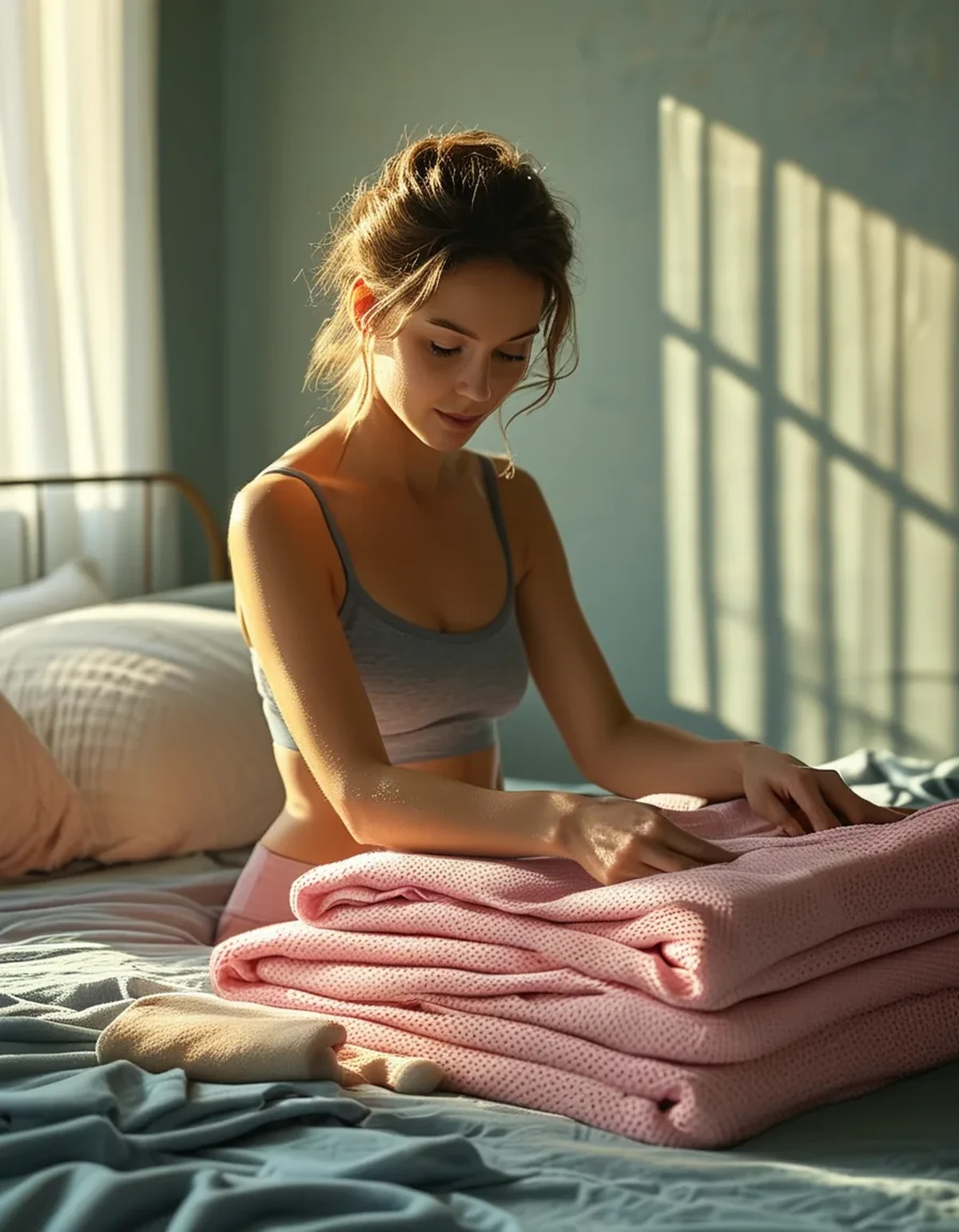
Seen here: High Waist 8” Yoga Shorts — shop similar styles on bubblelime.com
Keep Reading
This article is for general informational and styling purposes only. Fit, sizing, and product availability may vary.