Why Squat Proof Leggings Fail First at the Back of the Thigh
Quick Answer: Opacity depends on how far apart the yarns are pulled, and the back of the thigh just below the seat is where two stretches combine — the circumferential stretch from the thigh and the vertical stretch from hip flexion. That combined biaxial stretch thins the fabric more than the seat panel, which is usually cut with more material and more seam support. It is also the area you cannot see in a mirror.
Check below the seat, not on it.
Why does that specific area go first?
Because it takes the most stretch from the most directions, with the least construction help.
Opacity in a knitted fabric is a matter of yarn spacing. When you stretch a knit, the loops open and the gaps between yarns widen, and light passes through. How see through a legging becomes is essentially how far you have pulled the structure apart.
The back of the thigh below the seat gets stretched two ways at once during a squat:
Circumferentially, as the thigh muscles contract and expand under load, increasing girth. And longitudinally, because hip flexion lengthens the distance from the seat down the back of the leg — the skin and fabric over the back of the thigh has to cover more distance when the hip is bent.
Two axes of stretch at once thins fabric far more than either alone, and this is the single reason that area fails first.
Construction makes it worse. The seat is usually the panel manufacturers reinforce, because it is the area everyone tests. Gussets, extra panels, and seam placement all cluster there. The area immediately below it often gets none of that attention, so it is the thinnest, most stretched part of the garment.
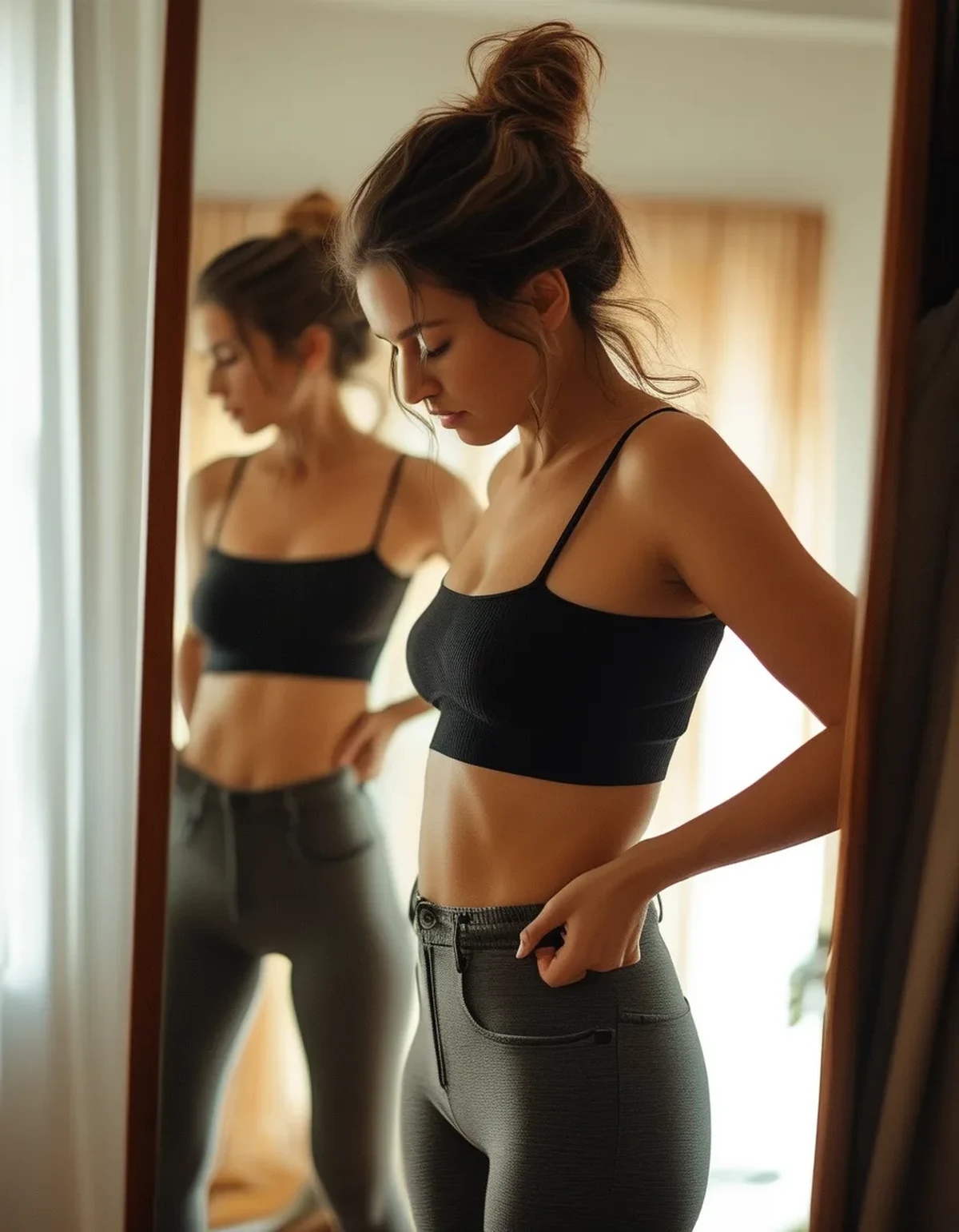
And there is a visibility problem. You cannot see the back of your own thigh in a squat, so the check most people perform — turning and looking over one shoulder while standing — tests the wrong panel in the wrong position.
Which is exactly why people are surprised in a class rather than in a fitting room.
What makes a legging hold up there?
Fabric weight, fibre content, construction, and correct size. In roughly that order of impact.
Fabric weight is the most reliable indicator. Heavier knits have more material to distribute across the same stretch, so the yarn spacing at full extension stays tighter. Anything described as buttery soft and extremely lightweight is trading opacity for feel, and that trade is real.
Fibre content matters. Higher elastane content generally means better recovery, which is the fabric’s ability to return to shape rather than stay stretched. Poor recovery is why leggings that passed the test when new fail at six months — the fabric no longer contracts back, so it sits permanently thinner.
Double knit and interlock constructions are more opaque than single jersey at the same weight, because there are effectively two layers of loops.
Colour is a genuine factor. Darker colours absorb more light and reveal less, and pale, bright, and heathered colours are considerably less forgiving. A light grey marl is the hardest test any legging faces.
Size is the one people get wrong deliberately. Sizing down increases stretch across the whole garment, and stretch is exactly what causes transparency. A legging that is too small will be sheer regardless of quality, and this is the most common cause of the problem by a distance.
One construction detail worth looking for: a gusset at the crotch and seams that run around rather than straight through the high stretch area. Seams add thickness and stability, so where they are placed changes what fails.

5 Mistakes People Make Testing for Squat Proofness
1. Testing in the wrong light. Bedroom lighting is soft and comes from above. Changing room and studio lighting is bright and overhead, which is the least forgiving there is. Test in the brightest light you have, ideally with a light behind you.
2. Checking the seat instead of below it. The seat is reinforced and it is where everyone looks. The panel just under the seat is where it actually fails, and it needs a different check.
3. Testing new instead of worn. Fabric behaves differently after twenty wears and washes, as elastane degrades and recovery drops. A legging that passed when new is not guaranteed to pass in six months, and the check is worth repeating.
4. Testing standing up. Standing tells you almost nothing. The stretch that causes transparency only occurs at depth, so any test that does not involve a full squat is not a test.
5. Testing dry only. Sweat changes everything. Damp fabric becomes more transparent because water fills the gaps between fibres and changes how light passes through, which is why a legging can be fine for the warm up and not for the second half of a class.
How do you test properly, and what changes in autumn?
The test takes thirty seconds and it needs a phone and a full squat.
Do a full depth squat, facing away from a mirror, and photograph the back of your thighs. This is the only way to see the panel that actually matters, in the position that actually matters. It feels ridiculous and it is definitive.
Do it in the brightest light available, and if you can, with a light source behind you. Overhead brightness is what studio and gym lighting provides.
Repeat it after the leggings have been worn and washed several times, not just when new.
Test in the underwear you actually wear with them, since contrast is a large part of what shows.
Bend forward as well as squatting. Hip hinge movements — deadlifts, forward folds, picking something up — stretch that same area differently and are where people are most exposed without realising.
What changes as the season turns:
Lighting changes. Less natural daylight means gyms and studios run more artificial overhead lighting, which is harsher than daylight and shows more. The same leggings that were fine in a daylit summer studio can look different under October floodlights.
Colour choices shift. Autumn ranges lean toward lighter greys, heathers, and muted tones, which are far less forgiving than summer blacks and navies. A colour that looks beautiful on a hanger may be the least opaque option in the range.
Layering hides problems and creates them. Longer tops cover the seat, which is genuinely useful, and they can also ride up during movement without you knowing.
Cold fabric behaves differently. Knits are slightly less relaxed when cold, so the first few minutes of a cold session put more stress on the fabric than the same movement warm.
Late summer is when a season of heavy use catches up. Leggings bought in spring have now had six months of wear, washing, and heat, and elastane degradation from tumble drying is the main reason recovery fails. Cold wash, no softener, never in the dryer.
FAQ: Squat Proof Legging Questions, Answered
Why do my leggings only go see through sometimes?
Usually a combination of stretch, moisture, and light. Damp fabric is more transparent, harsh overhead light shows more, and depth of squat changes how far the knit is pulled apart. All three vary session to session.
Does sizing up help?
Often, yes. Transparency is caused by stretch, and a legging that is too small is under more stretch everywhere. Sizing down for a tighter look is the most common cause of the problem.
Are expensive leggings more squat proof?
Not reliably. Fabric weight, knit construction, and colour predict opacity better than price does, and some premium ranges prioritise a very light, soft handle that works against opacity.
How long should a pair last?
It depends on use and care, and the main killer is heat. Tumble drying degrades elastane fastest, which destroys recovery and leaves the fabric permanently thinner. Cold wash, hang dry, and expect noticeably longer life.
TL;DR:
- The panel below the seat stretches circumferentially and longitudinally at once, so it thins more than the reinforced seat does.
- Fabric weight, knit construction, colour, and correct size predict opacity far better than price.
- Test with a photograph of a full depth squat, in bright overhead light, after the leggings have been washed a few times.
- Autumn brings harsher indoor lighting and lighter colours, and a spring purchase has now had six months of wear.
Take one photo mid squat under your brightest light. That single check settles it for every pair you own.
See It in Motion
Seen here: High Waist 8” Yoga Shorts — shop similar styles on bubblelime.com
Keep Reading
This article is for general informational and styling purposes only. Fit, sizing, and product availability may vary.