Why Your Leggings Pass the Squat Test and Fail on the Rowing Machine
Quick Answer: A squat stretches fabric mainly across the seat in one plane. Rowing combines a deep compressed hip angle, a rounded lower back at the catch and repeated sliding pressure against the seat - which stretches the fabric in two directions at once while abrading it. Leggings that pass a static mirror squat can still go translucent on a rower because biaxial stretch plus friction thins the knit far more than a single-plane stretch does. Test in the position you actually train in, at the end of a session, not in a fitting room.
You did the bend-over test in the changing room. Opaque. Confident.
Then you caught sight of yourself in the mirror opposite the rowing machines at stroke four hundred.
What does rowing do to fabric that a squat does not?
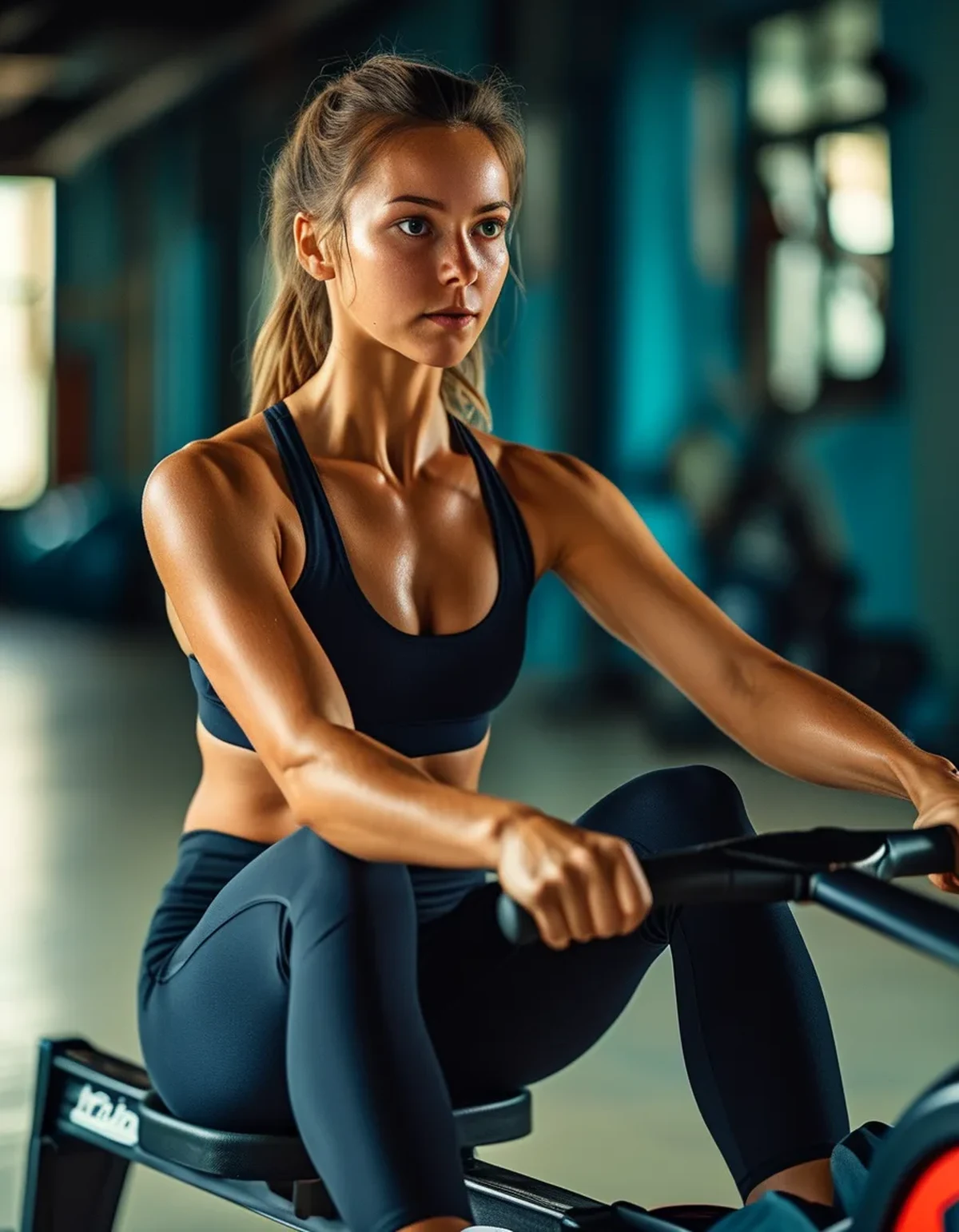
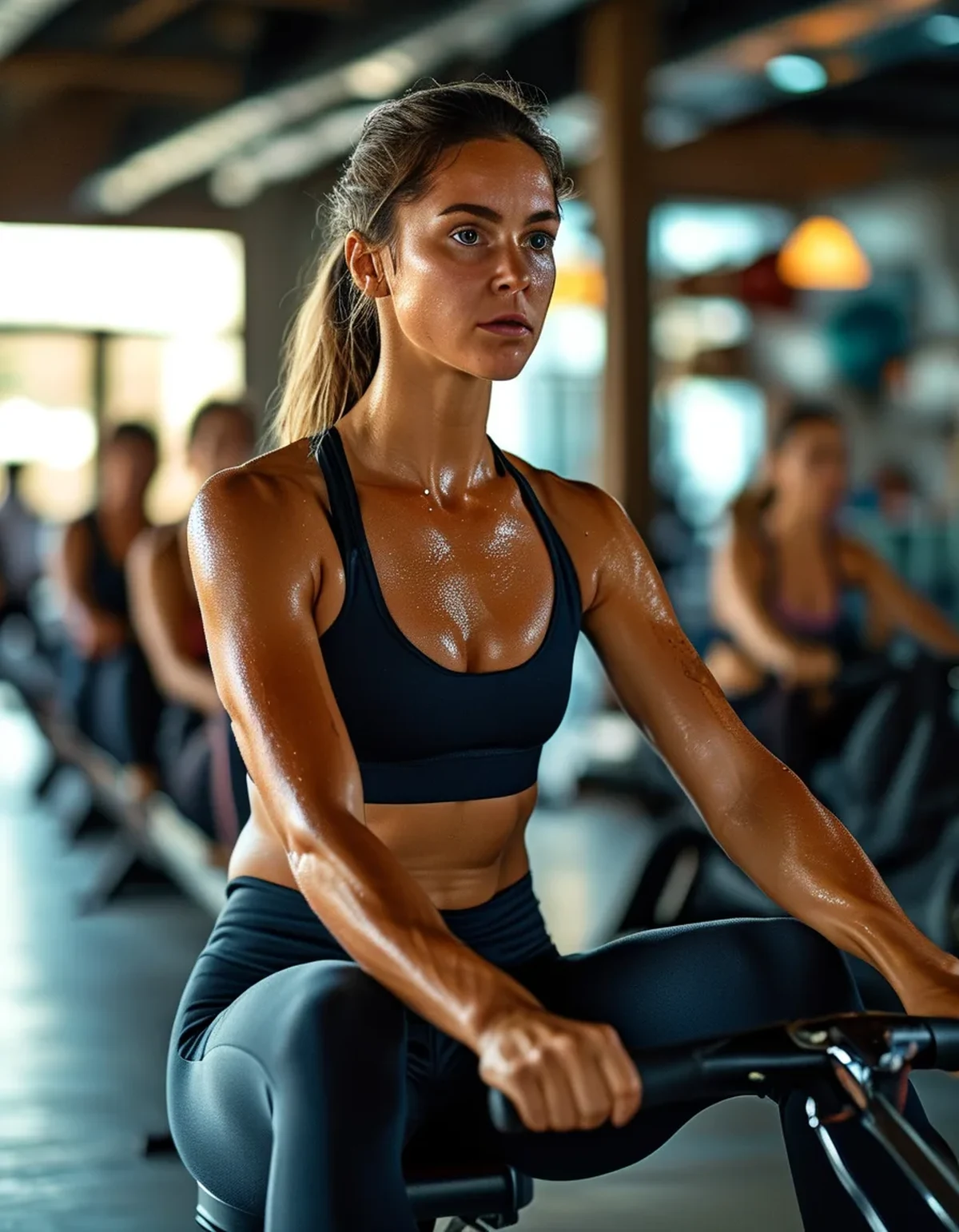
It stretches in two directions simultaneously. At the catch, the hip is deeply flexed and the seat is compressed against the rower seat, pulling the knit both across and along.
A knit that is stable under stretch in one direction can thin dramatically under biaxial stretch, because the yarn spacing opens in both axes at once.
It adds sustained compression, not just stretch - your body weight is pressing the fabric against a hard seat while it is at maximum extension.
And it adds repetition with friction. A squat session might be forty reps; a twenty-minute row is roughly five hundred, each one sliding the fabric against the seat.
Friction raises fabric temperature and relaxes elastane slightly, which is why the last ten minutes look worse than the first.
Sweat compounds all of it, because a wet knit is more transparent than a dry one at the same degree of stretch.
Why does the changing room test mislead so consistently?
It is static and brief. You hold a squat for two seconds; the rower holds a comparable stretch hundreds of times over twenty minutes.
The fabric is dry, cool and fully recovered, which is the best-case condition it will ever be in.
Changing room lighting is usually overhead and diffuse, which is the most forgiving light for opacity. Gym lighting from behind is the least forgiving.
You are looking at yourself in a mirror at close range, not being viewed from three metres away in the direction the light is coming from.
And the leggings are brand new, before any wash cycles have relaxed the elastane and before any abrasion has thinned the high-wear zones.
Which means the test tells you the fabric’s ceiling, not its behaviour in the conditions that actually matter.
How do I test properly at home?
Test at the end of a session, not the start. Warm, slightly stretched-out, faintly damp fabric is the real condition.
Use a phone on a timer rather than a mirror, and photograph from behind at about three metres with a window or light source behind you.
Test in the specific position that worries you. For rowing that means the catch: sitting, knees to chest, back rounded. For lifting it means the bottom of a squat.
Sit on a hard surface for the rowing test, because seat compression is a real part of why it fails.
Repeat it after five wash cycles, since opacity almost always declines somewhat and you want to know when a pair has moved to the walk-only pile.
And test the pair you actually reach for most, which is usually the oldest and thinnest and the one you have stopped questioning.
What construction actually survives the rower?
Higher fabric weight, straightforwardly. Weight per square metre correlates with opacity under stretch better than any marketing term does. Lighter fabrics feel better and hide less.
Double-layer or gusseted seat panels, where the highest-stretch zone is reinforced rather than being the same single layer as the calf.
A knit with high recovery, meaning it returns to shape between reps rather than progressively opening across hundreds of them.
Flatlock seams that sit outside the highest-tension zone, since seam lines are the first place a rounded lower back exposes.
Darker and more saturated colours, which is boring advice and remains the single most reliable variable. Light heather greys are the highest-risk finish on a rower.
And a high rise that stays put, because a waistband sliding down at the catch moves the maximum-stretch zone to a part of the fabric never designed to be there.
5 Mistakes That Make Good Leggings Look Cheap
1. Sizing down for compression. A size too small does not compress, it pre-stretches. You have spent your fabric’s stretch budget before the session starts, which is why the same leggings look fine on someone else.
2. Washing hot and drying warm. Heat is what kills elastane, and a tumble dryer does more damage in three cycles than a year of training. Cold wash, hang dry, and they last enormously longer.
3. Using fabric softener. It coats the fibres and degrades both wicking and recovery. The leggings feel lovely and behave worse under stretch.
4. Judging a pair by the fitting room only. The fitting room is the best condition the fabric will ever be in. Every real test is dimmer, warmer, damper and later in a session.
5. Keeping a favourite pair past its point. Everyone has one pair that has quietly become sheer and that they keep wearing because it is comfortable. The comfort is the elastane having given up. Demote it to a walking pair rather than discovering the problem publicly.
FAQ: Squat Proof Leggings Questions, Answered
Are expensive leggings actually more squat proof?
Often, but price is a poor direct proxy. Fabric weight, knit construction and colour predict opacity better than price. A heavier mid-price pair regularly outperforms a light premium one.
Why do light grey leggings fail worst?
Light, low-saturation colours have the least pigment to obscure what is under them, and heather blends further reduce coverage. It is the highest-risk finish under any stretch.
Do leggings become less squat proof over time?
Yes. Elastane relaxes with wash cycles and heat, and high-friction zones thin with abrasion. Retest a pair periodically rather than trusting the original result forever.
Does wearing the right underwear help?
It changes what shows rather than whether the fabric is sheer. Seamless styles in a colour close to the legging reduce the visual problem, but they do not fix a thin fabric.
Is the rowing machine unusually bad, or are other machines similar?
The rower is the common failure point because it combines deep hip flexion, compression against a hard seat and high repetition. Deep leg press and seated hamstring work create some of the same conditions.
Should I size up for rowing specifically?
Not usually - a loose legging bunches at the catch and is uncomfortable. Choose a heavier fabric and a higher rise in your normal size instead.
TL;DR:
- Rowing stretches fabric in two directions at once while compressing and abrading it - a squat does not.
- The changing room test uses the best-case condition the fabric will ever be in.
- Test at the end of a session, sitting on a hard surface, photographed from three metres with light behind you.
- Fabric weight, gusseted panels, high recovery and darker saturated colours predict opacity better than price.
- Cold wash and hang dry - heat is what ends a pair early.
Test in the position you train in, not the position the fitting room mirror suggests.
See It in Motion
Seen here: Super High Waist Embossed Yoga Leggings with Inner Pocket — shop it on bubblelime.com
Keep Reading
This article is for general informational and styling purposes only. Fit, sizing, and product availability may vary.